85 Years ago from the Archives - October 1941

The Hon. E. F. Ward was the Station Commander for R.A.F. Harrowbeer during the month of October.
On the 22nd October Squadron Leader R. W. Langmaid reported to the Station on posting as Squadron Leader in charge of administration. He signed the Station Operation Record Book for the month of October.
Visitors to R.A.F. Harrowbeer included :-
Squadron Officer Lady Rouse - W.A.A.F. Headquarters No.10 Group
Air Vice Marshal Orlebar
Group Captain Boret
From the Station O.R.B.
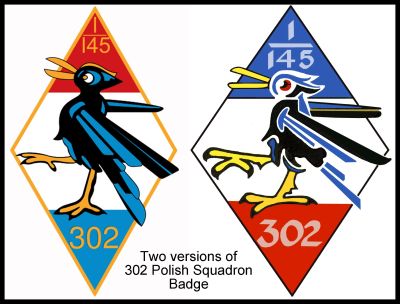
6th October At 1400 hours No.302 ( Polish ) Squadron arrived for duty at R.A.F. Harrowbeer with Hawker Hurricane aircraft ( later to be replaced by Supermarine Spitfire aircraft ). No.500 Squadron left the airfield on posting back to R.A.F. Bircham Newton, Norfolk.
10th October A.S.O. Cumberlege reported to R.A.F. Harrowbeer on posting in connection with cyphers.
11th October No.78 Signals Wing Calibration Flight arrived with Bristol Blenheim aircraft and a Hornet Moth aircraft ( their Squadron Hack ).
21st October For information ( not mentioned in the O.R.B. ) ;- Today No.276 Air Sea Rescue Squadron was formed inside " Knightstone House " at R.A.F. Station Harrowbeer ( in one of the five rooms of the ground floor of the " Watch Office ". Their Squadron Headquarters was based there until February 1943 when they moved across the road into " Ravenscroft " which then became their Squadron Headquarters until they left to go to R.A.F. Bolt Head, Devon and R.A.F. Portreath, Cornwall on the 3rd April 1944.
25th October No.130 Squadron arrived from R.A.F. Portreath, Cornwall.
From the Squadron O.R.B's.
No.78 Signals Wing Calibration Flight :-
No.78 Signals Wing Calibration Flight moved from Hillend, Henbury, Bristol on the 12th July 1941 to it's new Headquarters at the Holne Park Hotel, near Ashburton, Devon. The function of this Headquarters and the Wing was to maintain and administer the technical equipment for all the Stations within the area of Cornwall and Devon bounded on the east by a line running approximately from Minehead to Bees Head.
The aircraft they were operating were Bristol Blenheims, and they also had a Hornet Moth that was used as the " Squadron Hack ".
No.78 Signals Wing Calibration Flight was set up at R.A.F. Harrowbeer for the purpose of checking and re-calibration of Direction Finders ( an early form of Radar ) in the South West of England.
( The room overlooking Crapstone Road on the ground floor of " Knightstone House " was used s their Flight Office with an adjoining room which was used as a Crew Room. The two Blenheim aircraft that they used were picketed either side of " Knightstone House " in readiness for duty. ). This was relayed to Michael Hayes - The Archivist by a pilot ( Frank Williams ) who was a member of No.78 Signals Wing Calibration Flight.
The Commanding Officer at R.A.F. Harrowbeer for the Flight was Wing Commander W. G. Lawrence.
11th October No.78 Signals Wing Calibration Flight arrived with Bristol Blenheim aircraft.
13th October Flight Lieutenant M. H. Cox assumed command of " C " Flight at R.A.F. Harrowbeer.
23rd October LAC Eric Dawes, a Flight Mechanic with No.78 Signals Wing was struck on the head by a Blenheim ( S/No. T2286 ) air-screw. This resulted in his death three days later from his injuries. LAC E. Dawes was 21 years old and is buried in Stourbridge Cemetery.
25th October Blenheim aircraft ( S/No. V6121 ) made a heavy landing resulting in the collapse of one side of it's undercarriage.
No.130 Squadron :-
Squadron Leader Gibbs was the Squadron Commander for No.130 Squadron.
25th October Today No.130 Squadron moved from R.A.F. Portreath, Cornwall to R.A.F. Harrowbeer, Devon. They were operating with eighteen aircraft which consisted of Spitfire VB's and IIIA's. The Adjutant and Intelligence Officer arrived in a Harrow aircraft in the morning of the 25th. The rest of the No.130 Squadron personnel arrived by road or rail throughout the day. Billets were found for all of the Squadron except some of the Ground Crew. The Squadron experienced great difficulty on their arrival at R.A.F. Harrowbeer because of the state of the airfield.
The Aerodrome was very new with many civilian workmen still building aircraft pens, etc. It was also ill-equipped containing no night flying equipment.
Once the Squadron had moved in the pilots carried out sector reconnaissance flights, formation flying, shipping convoy patrol duties and cannon firing practice into the sea.
No.271 Squadron :-
25th October At 1035 hours two Harrow aircraft Serial Nos.K6987 and K6984 took off from R.A.F. Portreath and flew to R.A.F. Harrowbeer with fifty airmen and their kit from No.130 Squadron. The aircraft landed at 1120 hours.
25th October The two Harrow aircraft Serial Nos.K6987 and K6984 left R.A.F. Harrowbeer at 1155 hours an flew to R.A.F. Ibsley, Hampshire with forty one airmen and their kit from No.302 ( Polish ) Squadron. The Harrows landed at 1255 hours.
-0001.jpg/:/rs=w:400,cg:true,m)
No.276 Air Sea Rescue Squadron ' B ' Flight :-
The Commanding Officer for No.276 Air Sea Rescue Squadron at R.A.F. Harrowbeer was Squadron Leader Hulbert.
21st October At 1500 hours No.276 Air Sea Rescue Squadron was formed at R.A.F. Harrowbeer within ' Knightstone House ' which became the Squadron Headquarters. At the beginning of the formation ' B ' Flight was base at R.A.F. Warmwell, Dorset and ' A ' Flight at R.A.F. Roborough, Devon, ' C ' Flight was based at R.A.F. Portreath, Cornwall, and ' D ' Flight at R.A.F. Fairwood Common, Wales. From January 1942 ' A ' Flight was to operate from R.A.F. Warmwell and ' B ' Flight from R.A.F. Harrowbeer.
23rd October A Lysander aircraft took off from R.A.F. Roborough on a bearing of 360 degrees from Tintagel Head, Cornwall. Wreckage was found five hundred yards from the shore. A dinghy was dropped from the Lysander but there was no sign of a pilot in the water.
30th October Flight Lieutenant Fisher and Sergeant Badger took off in a Lysander aircraft from R.A.F. Roborough on a search 170 degrees from the Lizard, Cornwall. At a point twenty eight miles out a pilot was found. Two dinghies were dropped the pilot was not seen to move. He was later picked up by a M.T.B. ( motor torpedo boat ).
No.302 ( Polish ) Squadron :-
No.02 ( Polish ) Squadron arrived at R.A.F. Harrowbeer on the 6th October 1941 at 1400 hours with Hurricane IIB aircraft. Owing to the re-equipping of the Squadron with Spitfire aircraft there was no operational flying carried out until 15th October.
11th - 15th October The Squadron were being re-equipped with eighteen Spitfire VB's and two Spitfire IIA aircraft. All their old Hurricane IIB aircraft were collected by No.2 Delivery Flight, Colerne, Wiltshire and taken to No.245 Squadron.
During the re-equipping period aircraft familiarization, practice flying, sector reconnaissance flights and formation flying took place as the new Spitfire aircraft became available.
25th October Seventeen aircraft and their pilots with the necessary maintenance personnel were attached to R.A.F. Ibsley, in the New Forest, Hampshire for seven days to carry out cannon firing. No firing was carried out on fixed targets. The firing was merely to ' run in ' the new cannons.